

Challenge

FLASH irradiation is a promising method for significantly sparing healthy tissue during high-energy ionising radiation treatment. However, when using protons or carbon ions, fragmentation produces neutrons. Due to their high biological effectiveness, these neutrons pose a non-negligible risk of secondary malignancies. Furthermore, the extent of neutron exposure associated with bolus materials remains unclear for clinical use.

Scientific Approach

The project combines experimental measurements with Monte Carlo simulations. Local neutron dose distributions and energy spectra are measured using thermoluminescence dosimetry and novel scintillation detectors. These data serve as a benchmark for simulations to reliably determine neutron exposure during FLASH irradiation.

Objectives and Impact

The aim is the Monte Carlo-based and experimental determination of neutron contamination, alongside the further development of neutron measurement technology. This approach enables the optimisation of safety and effectiveness in FLASH irradiation, providing essential insights for future clinical development.

Research Team

Prof. Dr.
Klemens Zink
Principal Investigator
Prof. Dr.
Kai-Thomas Brinkmann
Principal Investigator
Prof. Dr.
Sebastian Adeberg
Principal Investigator
Lara Dippel
PhD student
Prof. Dr.
Uli Weber
Associate
Anna Becker
PhD student
Markel Fix Martinez
PhD student
Dr.
Hans-Georg Zaunick
Associate
Dr.
Yuri Simeonov
Staff

Publications

  • Analysis of hydrogen peroxide production in pure water: Ultrahigh versus conventional dose-rate irradiation and mechanistic insights
    Background Ultrahigh dose-rate radiation (UHDR) produces less hydrogenperoxide (H2 O2 ) in pure water, as suggested by some experimental studies, andis used as an argument for the validity of the theory that FLASH spares the normal tissue due to less reactive oxygen species (ROS) production. In contrast,most Monte Carlo simulation studies suggest the opposite. Purpose We aim to unveil the effect of UHDR...
  • Angular dependence of detector responses in high-energy brachytherapy
    Objective To characterize three small volume ionization chambers and a diamond detector concerning their angular dependent response under Ir-192 irradiation. Approach Monte Carlo (MC) simulations as well as experimental measurements of the angular dependent response were performed at 10 cm distance in air. Further simulations under TG-43 conditions were performed at distances of 1, 3, 5 and 10...
  • Impact of dose rate and its definition on the production of hydrogen peroxide in pure water
    Introduction The clinical interest in particle therapy continues to grow due to its precise dose dis tribution and increased biological effectiveness. Recent attention has focused on ultra high dose rate (UHDR) irradiation, which has been associated with reduced normal tissue toxicity, an effect that is partially attributed to altered radiolysis chemistry. However, most existing experimental...
  • Investigations on the beam quality correction factor for ionization chambers in high-energy brachytherapy dosimetry
    Objective To enhance the investigations on MC calculated beam quality correction factors of thimble ionization chambers from high-energy brachytherapy sources and to develop reliable reference conditions in source and detector setups in water. Approach The response of five different ionization chambers from PTW-Freiburg and Standard Imaging was investigated for irradiation by a high dose rate...
  • On the Way to Accounting for Lung Modulation Effects in Particle Therapy of Lung Cancer Patients - A Review
    Particle therapy presents a promising alternative to conventional photon therapy for treating non-small cell lung cancer (NSCLC). However, the heterogeneous structure of lung tissue leads to the degradation of the Bragg peak and thereby to the degradation of the dose distribution. This review offers a comprehensive overview of the models developed to account for these modulation effects. It...

News

  • Scientific exchange, new project ideas and an award: ADMIT at the EURADOS Annual Meeting 2026
    Lisa Kempus
    23.02.2026
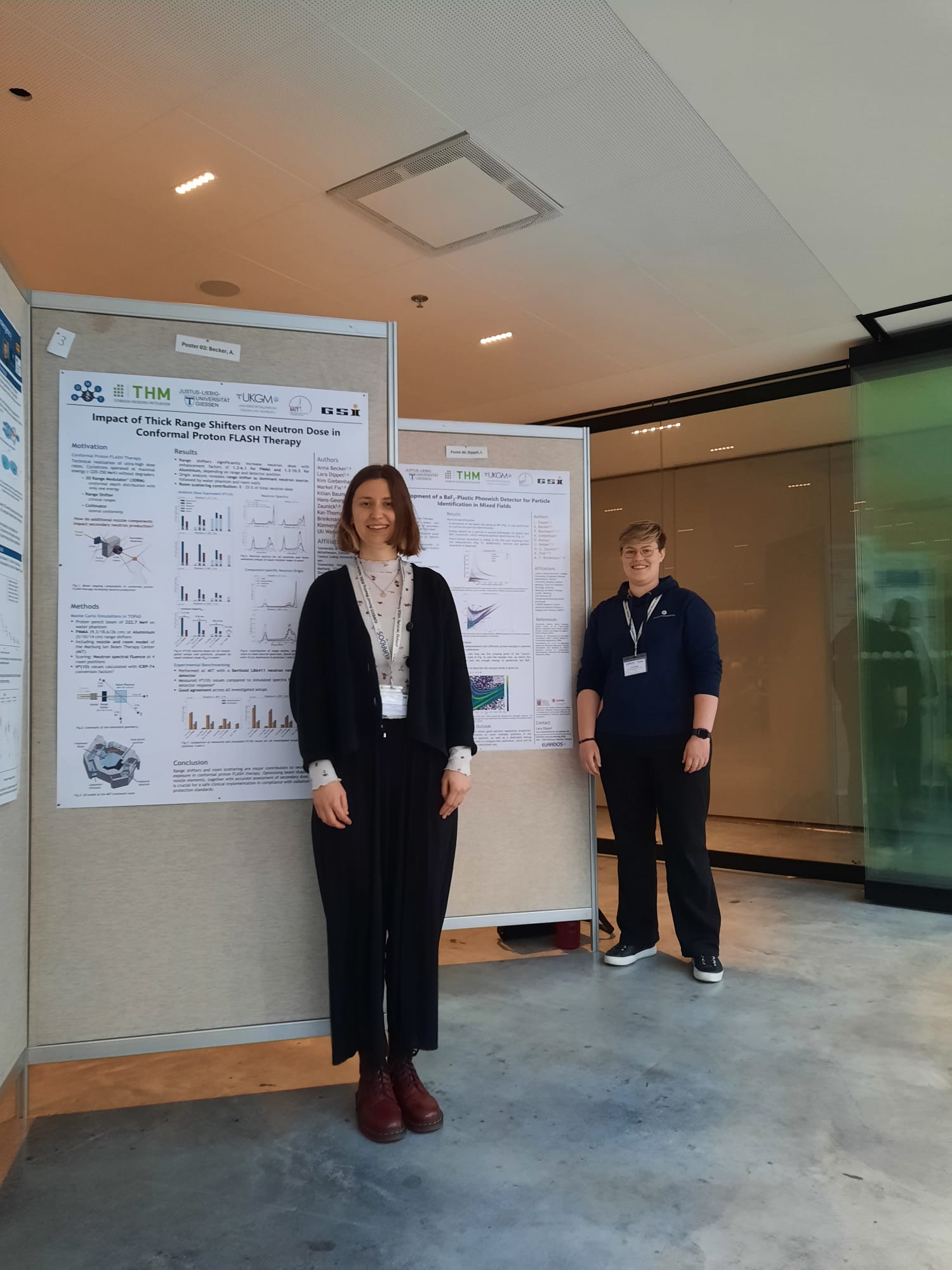
    The ADMIT subproject A team participated in this year's Annual Meeting of the European Radiation Dosimetry Group EURADOS in Helsinki with three doctoral students (Lara Dippel, Kim Giebenhain and Anna Becker) and two principal investigators (Prof. Dr. Kilian Baumann and Prof. Dr. Uli Weber). After the team joined the meeting for the first time in 2025, this year's meeting provided an opportunity to...
  • First ADMIT Interdisciplinary Summer School of Medical Physics
    Lisa Kempus
    22.08.2025
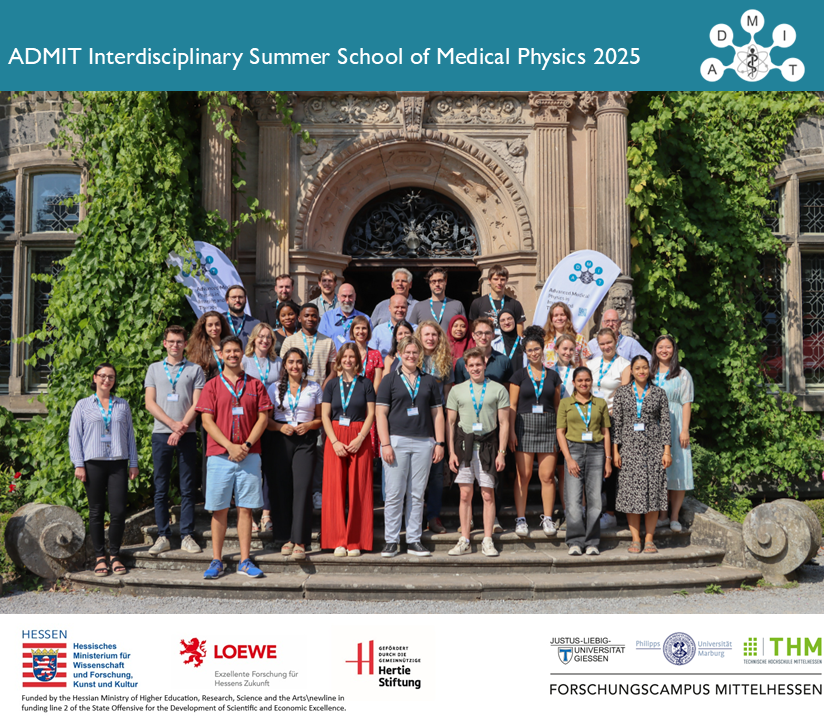
    What an inspiring and motivated group at our first ADMIT Interdisciplinary Summer School of Medical Physics, held from August 19 to 22 at Rauischholzhausen Castle!  The course brought together around 30 early-career researchers in the field of MedicalPhysics. The goal was to offer comprehensive insights into the various fields, as well as networking opportunities and interdisciplinary skills, with a special...
  • ADMIT at EURADOS Annual Meeting 2025 in Bukarest
    Lisa Kempus
    27.02.2025
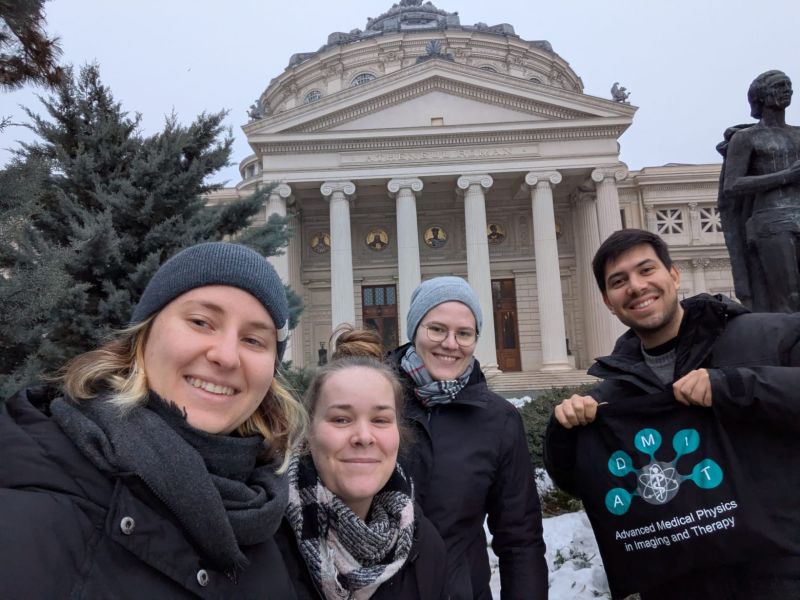
    From 24 to 27 February 2025, doctoral students from ADMIT Subproject A participated in the annual meeting of EURADOS (European Radiation Dosimetry Group) in Bucharest, Romania. EURADOS focuses on scientific and technical research and development in the field of ionising radiation and is organised into several working groups (WGs) specialising in various areas of dosimetry. For these doctoral...
  • ADMIT in Rome
    ADMIT
    24.01.2025
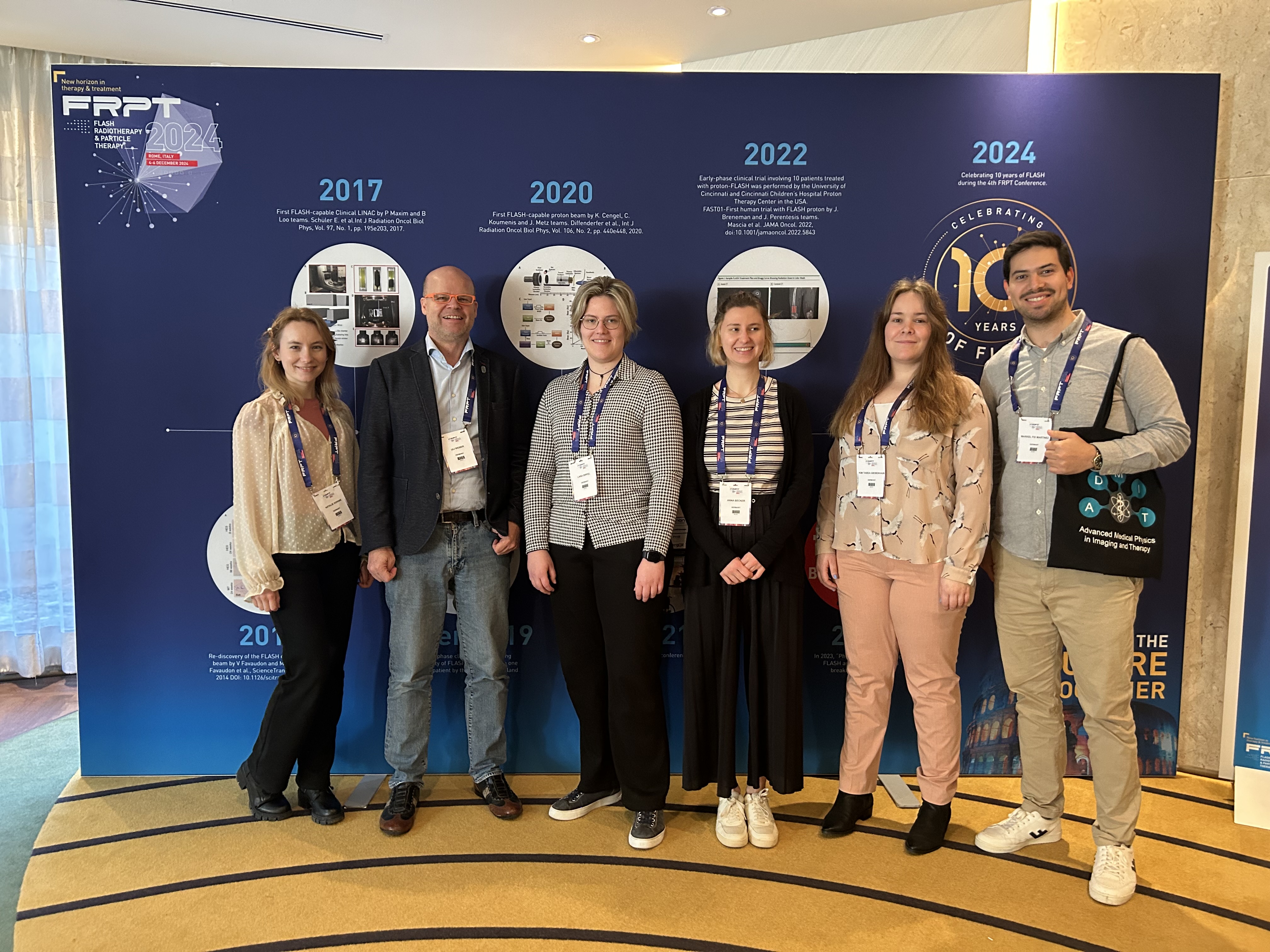
    From 4 to 6 December 2024, our PhD students from subproject A and D took part in the FLASH Radiotherapy & Particle Therapy - FRPT Conference 2024 in Rome, Italy. In its 4th edition, FRPT 2024 focussed on the diverse range of topics related to FLASH therapy. This novel treatment method irradiates tumours with photons or particles using ultra-high dose rates. This not only significantly shortens the...
  • Successful end of our first ADMIT-Retreat
    ADMIT
    24.01.2025
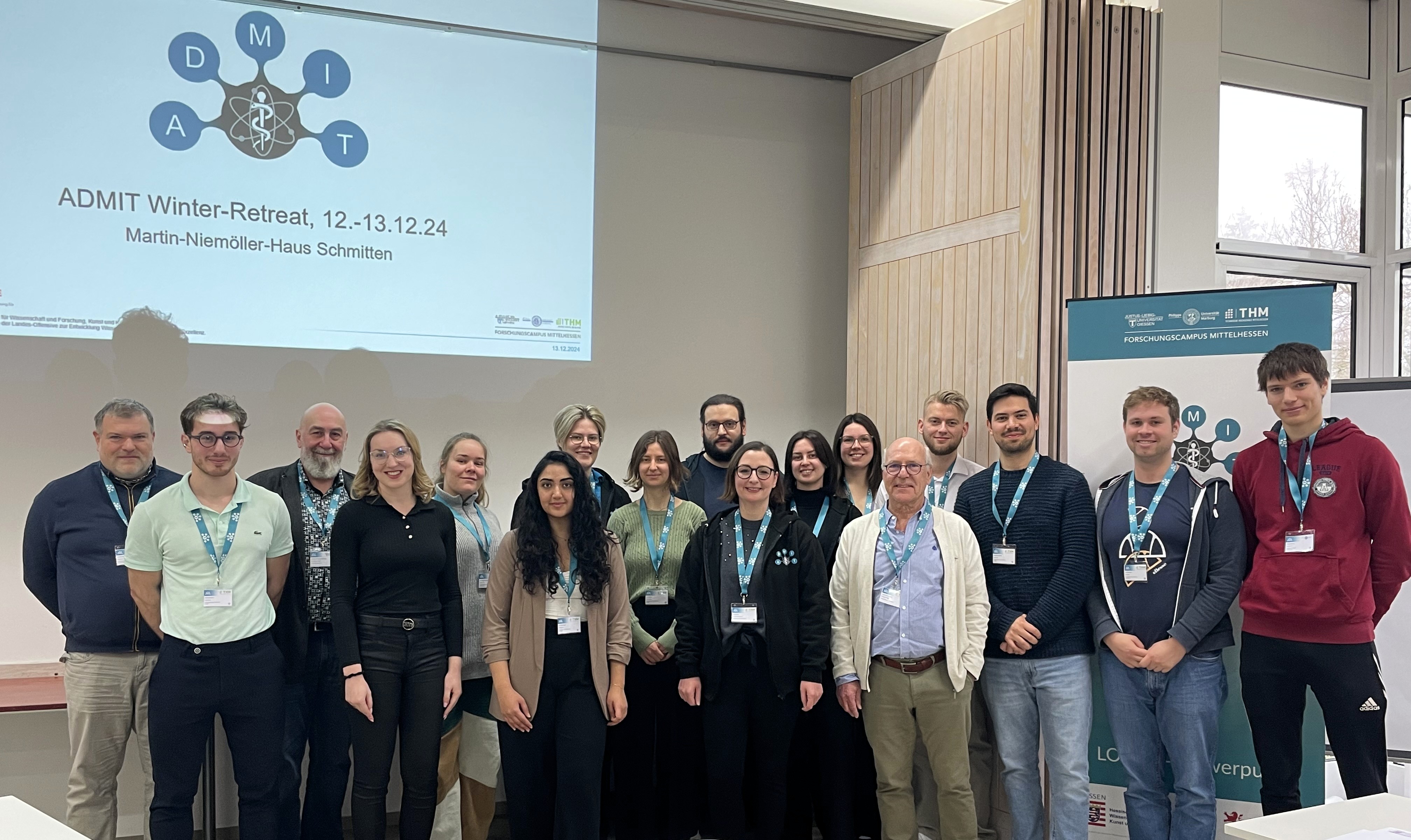
    From 12 to 13 December 2024, the members of the LOEWE Research Cluster ADMIT, in which the three Central Hessian universities of the FCMH (Justus Liebig University Giessen, Philipps University Marburg, University of Applied Sciences) have been working together since the beginning of the year, met for their first joint Retreat at the Martin-Niemöller-House in Schmitten.The focus was on an...