Long-term outcomes of external beam radiotherapy combined with high-dose-rate brachytherapy boost in intermediate- and high-risk prostate cancer

Background

For intermediate- and high-risk prostate cancer, dose escalation is essential to optimize oncological control. While external beam radiotherapy (EBRT) alone can be limited by dose constraints to adjacent organs-at-risk, high-dose-rate (HDR) brachytherapy provides a highly conformal boost option.

Methods

This retrospective single-institution study analyzed 250 patients with localized intermediate- and high-risk prostate cancer treated between 06/2004 and 03/2024 with EBRT plus HDR brachytherapy boost. The EBRT dose averaged 50.4 Gy (range: 45–64 Gy), followed by HDR boost in nearly all patients (98.8%) with two fractions of 9 Gy. Androgen deprivation therapy (ADT) was administered to 39.2% of patients (98/250). Primary outcomes included local control (LC), progression-free survival (PFS), and overall survival (OS).

Results

After a median follow-up of 63.5 months (mean 70.4, range 3–231), oncological outcomes were excellent. LC rates were 99.6% at 3 years, 98.8% at 5 years, and 98.4% at 10 years. PFS was 98%, 96.8%, and 96% at 3, 5, and 10 years, respectively. OS reached 98.4% at 5 years and 96% at 10 years. During the 231-month follow-up, 8.4% of patients developed biochemical recurrence, whereas in-field progression was observed in only 1.6%. Patients receiving ADT achieved 100% LC across all timepoints. Patterns of failure were predominantly distant (lymph nodes and bone). Acute and late toxicity was predominantly mild. No acute Grade ≥3 genitourinary (GU) or gastrointestinal (GI) toxicity was observed. Late Grade ≥3 toxicity was rare (0.8%, limited to GU events), and no late Grade ≥3 GI toxicity occurred.

Conclusions

The combination of EBRT and HDR brachytherapy boost yields outstanding long-term LC, PFS, and OS for intermediate- and high-risk prostate cancer, confirming this regimen as a highly effective treatment strategy. The dominant pattern of failure was distant, underscoring the need for optimized systemic therapy integration in high-risk patients.

Forschende

Prof. Dr.
Rita Engenhart-Cabillic
Gruppenleiterin
Dr. med.
Niklas Recknagel
Clinical Scientist
Prof. Dr.
Martin Hirsch
Assoziiertes Mitglied
PD Dr. med.
Ahmed Gawish
Assoziiertes Mitglied
Hyacinthe Kenfack Diffo
Doktorand
Prof. Dr.
Sebastian Adeberg
Gruppenleiter

Publikationen

  • Long-term outcomes of external beam radiotherapy combined with high-dose-rate brachytherapy boost in intermediate- and high-risk prostate cancer
    Background For intermediate- and high-risk prostate cancer, dose escalation is essential to optimize oncological control. While external beam radiotherapy (EBRT) alone can be limited by dose constraints to adjacent organs-at-risk, high-dose-rate (HDR) brachytherapy provides a highly conformal boost option. Methods This retrospective single-institution study analyzed 250 patients with localized...
  • Proton therapy for pancreatic cancer: real-world single-center experience of efficacy, toxicity, and predictors of outcome
    Background Pancreatic cancer has a poor prognosis, with five-year survival rates of 10-13%. Surgery is the only curative option, though not feasible for many patients. Radiation therapy is crucial but limited by surrounding radiosensitive organs. Proton therapy provides improved dose distribution and higher biological effectiveness; however, clinical data comparing it to conventional photon...

Aktuelles

  • Erfolgreicher Abschluss des 1. ADMIT-Retreats
    ADMIT
    24.01.2025
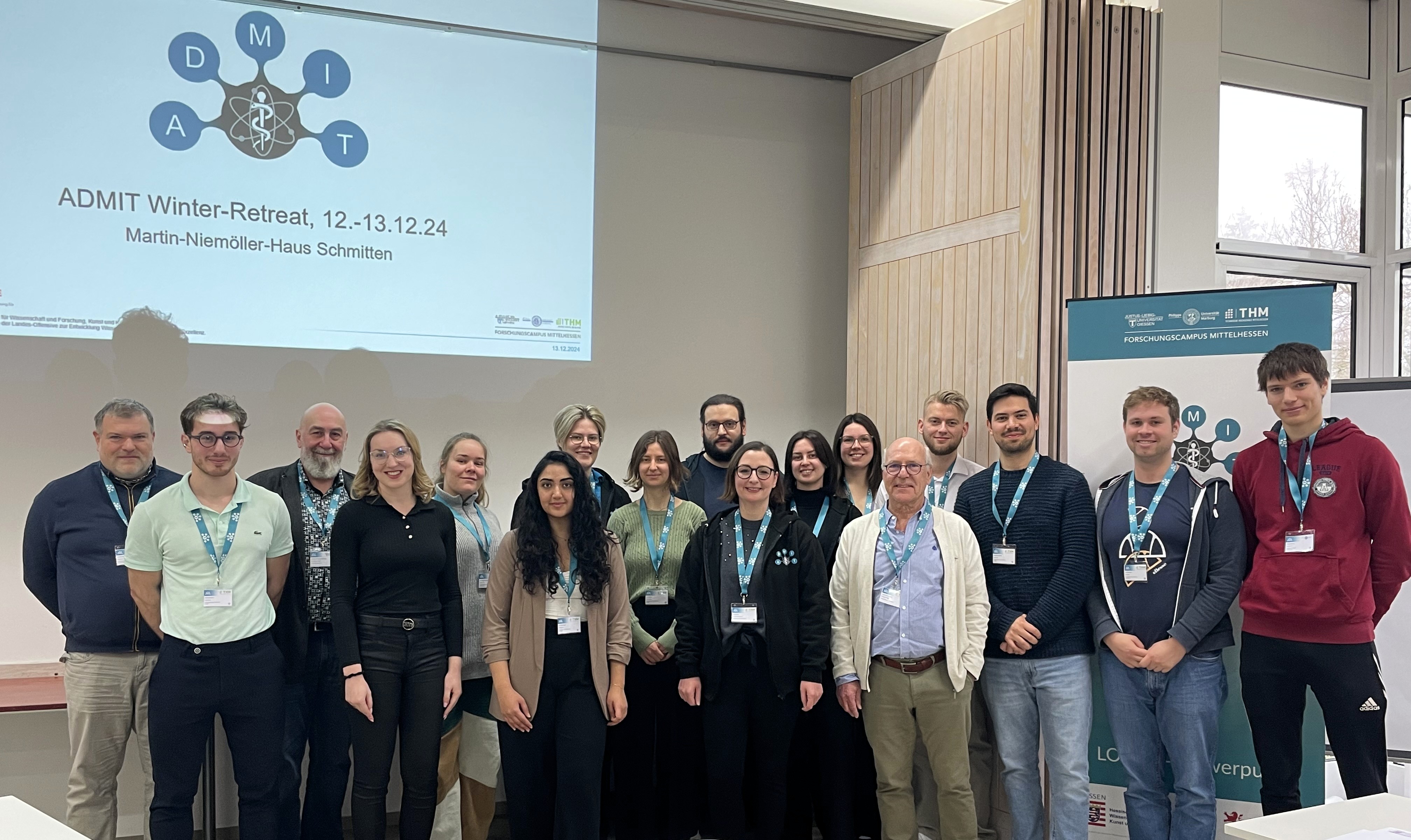
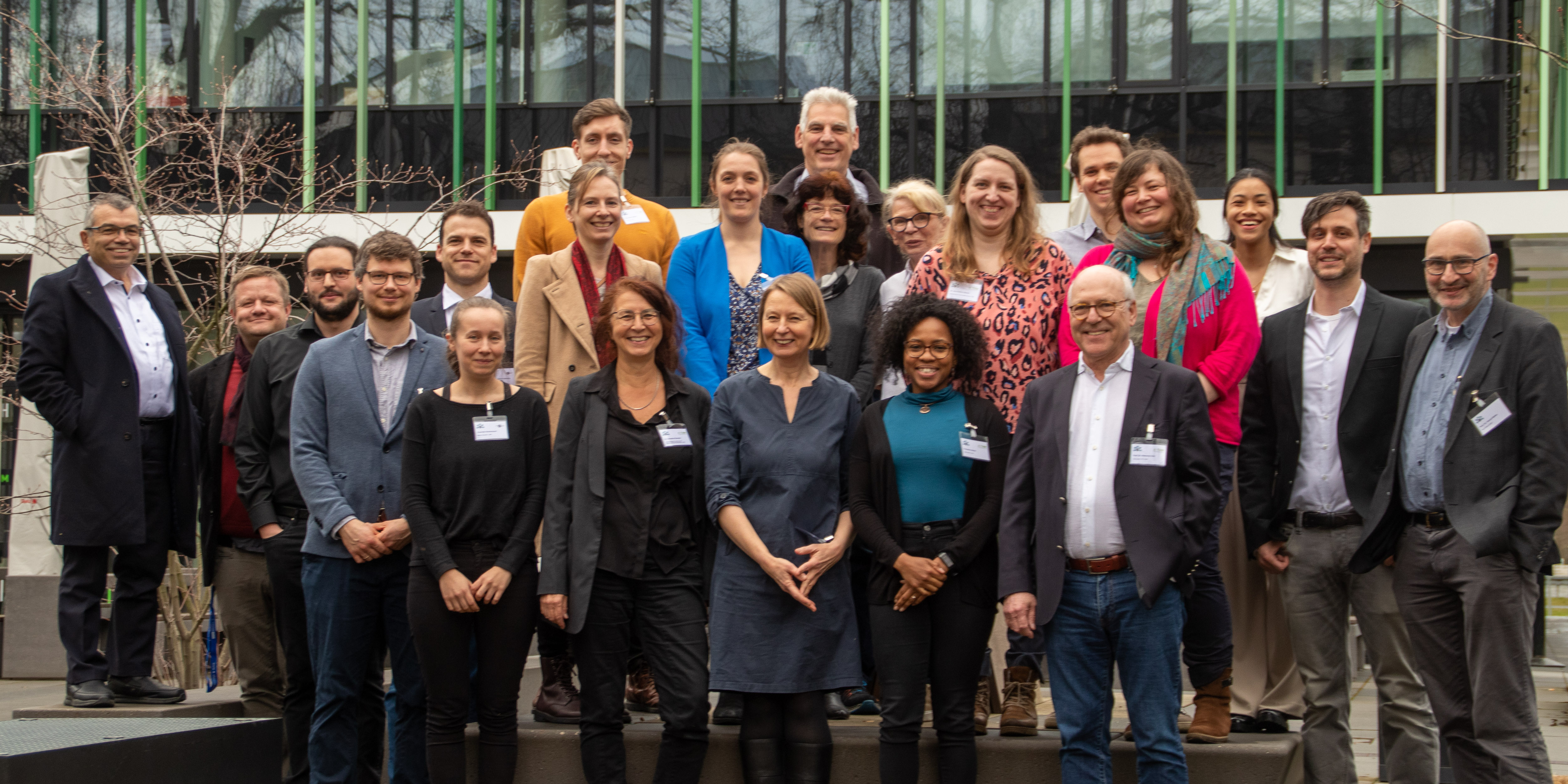
    Vom 12. bis 13. Dezember 2024 trafen sich die Mitglieder des LOEWE-Schwerpunkts ADMIT, in welchem die drei Hochschulen des Forschungscampus Mittelhessen (Justus-Liebig-Universität Giessen, Philipps-Universität Marburg, Technische Hochschule Mittelhessen) seit Jahresbeginn zusammenarbeiten, zum ersten gemeinsamen Retreat im Martin-Niemöller-Haus in Schmitten. Im Fokus standen die intensive...
  • Erste interdisziplinäre ADMIT Summer School für Medizinische Physik
    Lisa Kempus
    22.08.2025
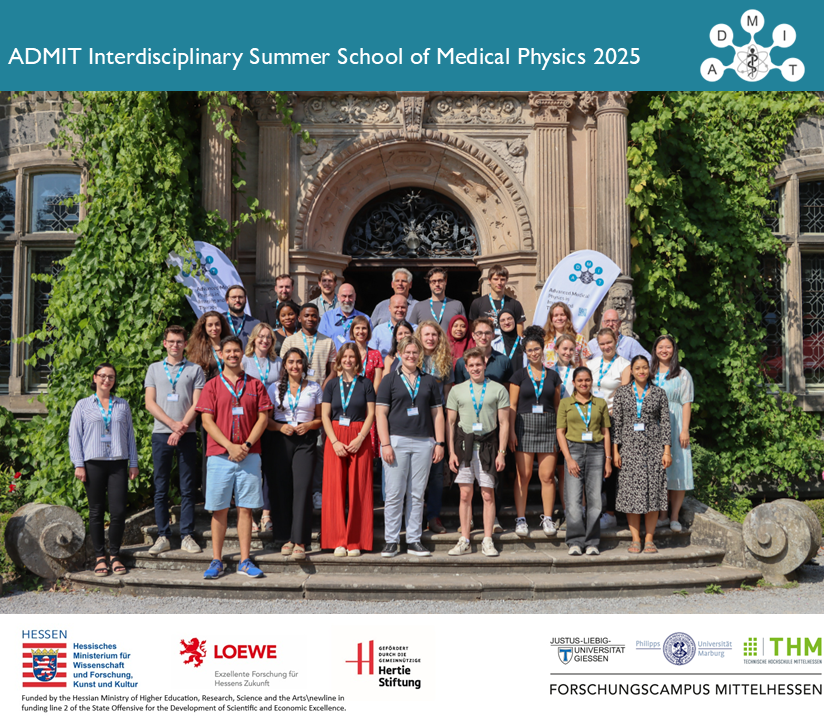
    Was für eine inspirierende und motivierte Gruppe! Vom 19. bis 22. August fand auf Schloss Rauischholzhausen unsere allererste ADMIT Interdisziplinäre Summer School für Medizinische Physik statt. Die Veranstaltung brachte rund 30 Nachwuchswissenschaftlerinnen und -wissenschaftler aus dem Bereich der Medizinischen Physik zusammen. Unser Ziel war es, umfassende Einblicke in verschiedene Fachgebiete zu...
  • Mit medizinischer Physik Krebs und Parkinson bekämpfen
    Pressestelle THM
    09.09.2024
    Krebs und neurodegenerative Erkrankungen gehören zu den größten gesundheitlich-gesellschaftlichen Herausforderungen der heutigen Zeit. Unter Federführung der THM arbeiten die drei mittelhessischen Hochschulen seit Jahresbeginn im LOEWE-Schwerpunkt ADMIT (Advanced Medical Physics in Imaging and Therapy) gemeinsam an innovativen medizinphysikalischen Ansätzen, um diesen Herausforderungen zu begegnen....
  • Neue Wege gegen den Krebs
    Foto: THM/Björn Trebels
    Pressestelle THM
    04.07.2023
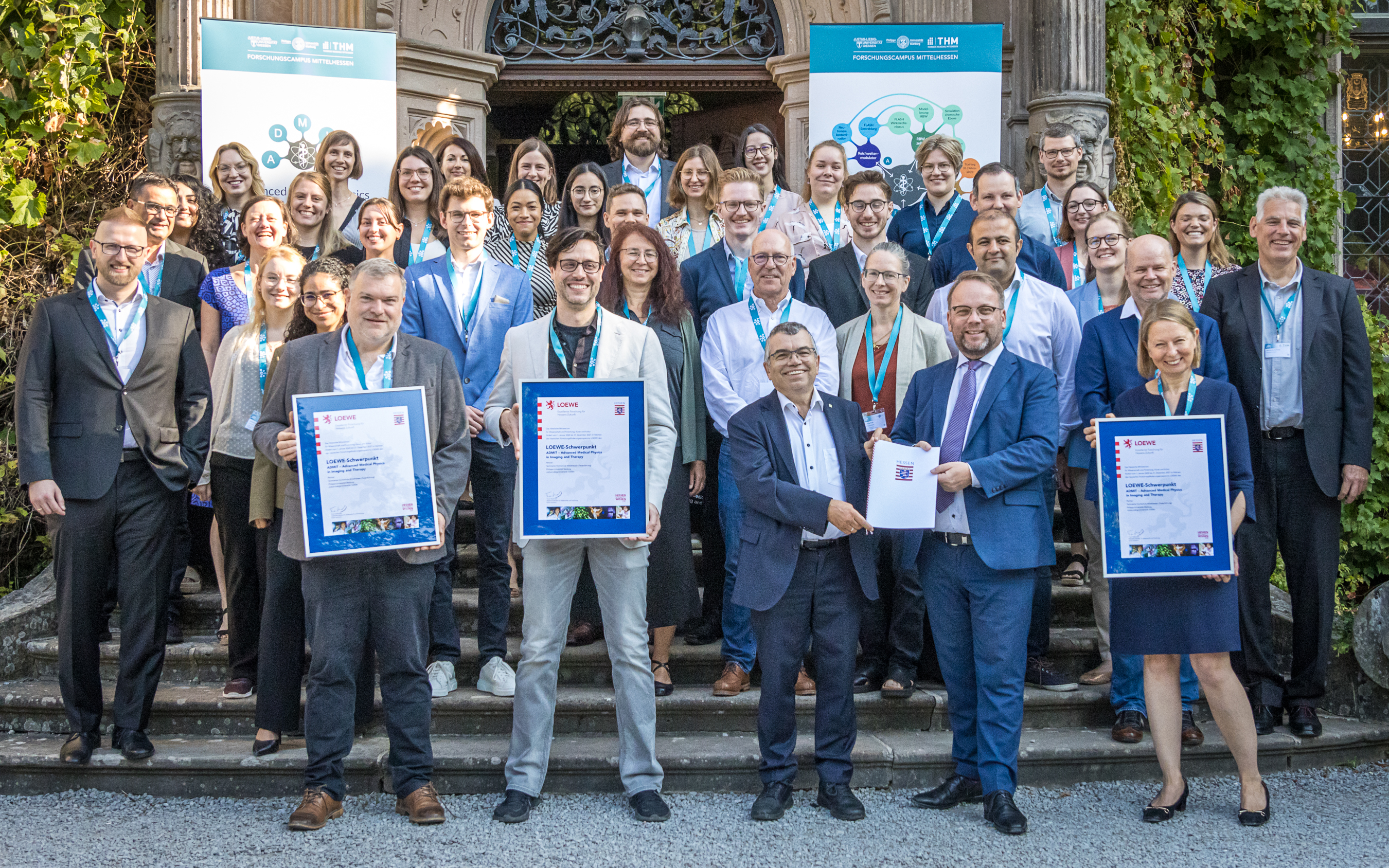
    Die Technische Hochschule Mittelhessen (THM) erhält eine Zuwendung in Höhe von 4,8 Millionen Euro zur Schaffung des LOEWE-Schwerpunktes ADMIT. Gemeinsam mit den Partnern Philipps-Universität Marburg  und Justus-Liebig-Universität Gießen (JLU) sowie weiteren Forschungseinrichtungen und Unternehmen aus Deutschland und den USA sollen neue bildgebende Verfahren für Diagnostik und Therapie von...